Avoidant and Anxious Attachment: How the Push-Pull Dynamic Works
Avoidant and anxious attachment can create one of the most confusing relationship patterns: one person reaches for closeness just as the other person reaches for distance. The result can feel intense, hopeful, painful, and repetitive all at once. This guide explains what the pattern usually means, why anxious and avoidant partners may attract each other, how the cycle shows up in dating and adult relationships, and what helps when both people want to respond with more security. If your relationship questions overlap with rejection fear or long-term social avoidance, an educational AVPD self-reflection tool can also give you structured language for patterns worth discussing with a qualified professional.

What Avoidant and Anxious Attachment Usually Mean
Attachment language describes patterns in how people seek closeness, handle distance, and respond to relationship stress. It is not a moral label, a life sentence, or a full mental health evaluation.
Anxious attachment usually involves a strong need for reassurance and connection. A person may notice shifts in tone, delays in replies, or small moments of distance and quickly wonder whether the relationship is at risk. Their protective move is often to reach, ask, explain, text, or resolve the issue immediately.
Avoidant attachment usually involves discomfort with too much emotional pressure or dependency. A person may care deeply and still feel flooded when a conversation becomes intense. Their protective move is often to create space, minimize the issue, delay the conversation, or handle distress privately.
The anxious attachment and avoidant attachment relationship becomes difficult when these protective moves trigger each other. The anxious partner may read distance as rejection. The avoidant partner may read pursuit as pressure. Both may be trying to feel safe, but their strategies can make the other person feel less safe.
It is also important to separate attachment language from avoidant personality disorder. AVPD involves a broader and more persistent pattern of social inhibition, feelings of inadequacy, and fear of criticism or rejection. Attachment patterns can overlap with rejection sensitivity, but they are not the same thing.

Why Anxious and Avoidant Attachment Can Feel So Magnetic
The anxious-avoidant relationship dynamic often starts with real attraction. An anxious person may experience an avoidant person as calm, independent, and emotionally steady. An avoidant person may experience an anxious person as expressive, warm, and willing to create connection. Each partner may carry something the other person wants to develop.
The difficulty is that the same traits that feel appealing early on can become stressful later. Independence may begin to feel like emotional distance. Warmth may begin to feel like pressure. A slow reply, a cancelled plan, or an unresolved disagreement can activate very different meanings for each partner.
In a typical cycle, the anxious partner senses distance and moves closer. The avoidant partner senses intensity and moves back. The anxious partner then feels more alarmed and may protest, over-explain, or ask for more reassurance. The avoidant partner may feel criticized or trapped and withdraw further. Neither person has to be cruel for the pattern to become painful.
This is why "compatibility" is the wrong first question. A better question is whether both people can see the cycle as the shared problem. If one partner sees only neediness and the other sees only coldness, the relationship stays stuck in blame. If both can notice their own protective moves, the relationship has more room for change.
How the Cycle Shows Up in Dating and Adult Relationships
Avoidant and anxious attachment dating often feels strongest during moments of uncertainty. Early chemistry can be high because the relationship has novelty, mystery, and emotional charge. The pattern becomes clearer when the relationship asks for consistency.
Common dating signs include frequent misunderstanding about texting, different expectations about time together, and different speeds for defining the relationship. The anxious partner may want clarity quickly because uncertainty feels unsafe. The avoidant partner may want more time because quick clarity feels like a loss of freedom.
In adult relationships, the same pattern can appear around conflict, intimacy, future planning, sex, family pressure, or emotional repair after hurt. The anxious partner may want to talk until the issue feels settled. The avoidant partner may need a break before they can speak clearly. Without an agreed process, "I need to talk now" and "I need space now" can become competing emergencies.
Here is a simple way to map the cycle without blaming either person:
| Moment | Anxious-leaning response | Avoidant-leaning response | Safer alternative |
|---|---|---|---|
| Texting slows down | Seek reassurance repeatedly | Delay replying to reduce pressure | Name expectations calmly |
| Conflict starts | Push for immediate resolution | Shut down or leave the room | Set a return time |
| Closeness increases | Ask for more proof of care | Protect independence | Discuss pace directly |
| A partner needs space | Fear abandonment | Feel relief, then guilt | Treat space as planned repair |

This kind of map is useful because it shifts the question from "Who is the problem?" to "What happens between us when both nervous systems are activated?" For people whose avoidance also connects with rejection fear, a private reflection resource such as a private avoidant traits screening starting point may help organize what to bring into therapy or a careful conversation.
Can Anxious and Avoidant Attachment Styles Work Together?
An anxious and avoidant attachment relationship can work when both partners are willing to build safer behaviors, not just understand the labels. Insight matters, but the relationship changes through repeated, visible responses during stress.
The first requirement is shared ownership. The anxious partner cannot be the only one regulating, waiting, and softening. The avoidant partner cannot be the only one creating space, slowing the pace, and absorbing emotional intensity. Each person has a stretch task.
For the anxious-leaning partner, the stretch is to pause before escalating. That does not mean pretending not to care. It means noticing the urge to chase, then turning the first step toward self-regulation: breathing, writing down the fear, contacting a trusted friend, or asking for one clear reassurance instead of ten.
For the avoidant-leaning partner, the stretch is to stay connected while asking for space. That does not mean staying in an overwhelming conversation indefinitely. It means replacing disappearance with a clear message: "I care about this. I need an hour to settle down, and I will come back at seven."
As a couple, the most practical tool is a repair agreement. Decide when calm how you will handle stress later. A useful agreement might include:
- A phrase that signals overwhelm without blame.
- A maximum time for a break before returning to the topic.
- One reassurance sentence the anxious partner can request.
- One space request the avoidant partner can make without disappearing.
- A rule against major relationship decisions during emotional flooding.
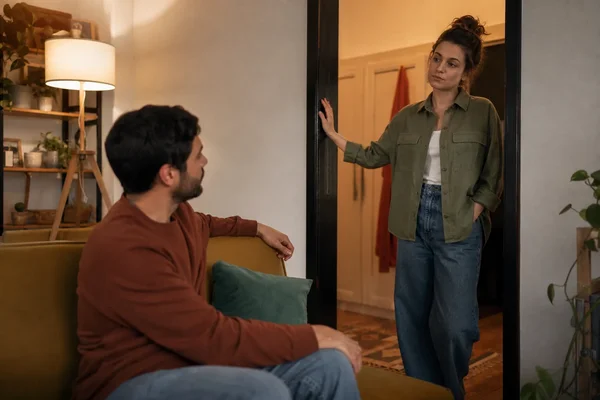
The goal is not perfect calm. The goal is predictable repair. A relationship becomes safer when both people learn that conflict can pause, resume, and end without abandonment or emotional shutdown.
Can You Be Both Avoidant and Anxious Attachment?
Yes, a person can show both avoidant and anxious attachment patterns. Many people use the phrase anxious-avoidant attachment to describe this inner conflict: wanting closeness, then feeling threatened by it; fearing abandonment, then pulling away when intimacy becomes real.
In common attachment language, high anxiety and high avoidance are often associated with fearful-avoidant or disorganized attachment. This does not mean a person is broken. It means their system may treat both distance and closeness as risky. They may pursue a partner when they feel rejected, then shut down when the partner becomes available.
Context matters. A person may seem anxious with a distant partner and avoidant with a very intense partner. Someone may feel steady in friendships but more anxious in romance. Another person may become avoidant only when conflict feels shaming. Attachment patterns are best understood as repeated tendencies across situations, not as a single reaction on a bad day.
If you recognize both sides in yourself, focus less on naming the style perfectly and more on identifying sequence. What happens first: fear, numbness, anger, people-pleasing, withdrawal, over-explaining, or self-criticism? What helps your body settle before you send the message, cancel the plan, or make the threat to leave? Those answers are usually more useful than the label alone.
When the Pattern May Be Too Costly to Stay In
One of the hardest questions is when to leave an avoidant partner, or when to step away from any anxious-avoidant relationship dynamic. No article can decide that for you, and attachment labels should not be used to excuse harm. The question is whether the relationship has enough safety, respect, and mutual effort to keep working on the pattern.
Consider taking the concern seriously if one partner repeatedly refuses accountability, uses silence as punishment, mocks emotional needs, pressures the other person to abandon boundaries, or makes promises that never become behavior. Also take it seriously if the relationship is affecting sleep, work, friendships, physical health, or your sense of self.
Leaving may become the healthier option when only one person is trying, when repair agreements are repeatedly ignored, or when the relationship includes intimidation, coercion, threats, or abuse. In those cases, focus on support, planning, and professional guidance rather than trying to solve the attachment pattern inside the same cycle.
For less severe but still painful dynamics, a temporary pause can sometimes clarify what is happening. Use that time to ask: Do I feel more like myself in this relationship? Can we talk about impact without blame spirals? Does my partner make measurable effort? Do I make measurable effort? Are we building security, or only repeating intensity?
A Low-Pressure Way to Reflect on Your Next Step
Avoidant and anxious attachment is not just a dating topic. It can touch rejection fear, self-worth, social avoidance, and the stories people carry about whether closeness is safe. If the pattern keeps repeating, treat it as information rather than proof that you or your partner are impossible to love.
A useful next step is to write a two-column reflection. In the first column, list what you do when you fear distance. In the second, list what you do when you fear closeness or pressure. Circle the behaviors that protect you short term but damage trust long term. Then choose one small replacement behavior for the next conflict.
If your reflection points beyond relationship habits into long-standing avoidance, shame, or fear of criticism, a structured way to reflect on avoidance and rejection fear can be a gentle starting point. Use it as educational self-reflection, not as a final answer. For persistent distress, trauma history, relationship harm, or questions about AVPD, a qualified mental health professional can provide a fuller assessment and support plan.

FAQ
Can an avoidant and anxious attachment relationship work?
Yes, it can work when both people are willing to recognize the cycle and practice safer behaviors. The anxious partner usually needs reliable reassurance and self-regulation tools. The avoidant partner usually needs space that is clear, time-limited, and connected. If only one person is making changes, the cycle often continues.
What is the hardest attachment style to date?
There is no single hardest attachment style to date. Any anxious, avoidant, or mixed pattern can be difficult when it is unrecognized or used to excuse hurtful behavior. The hardest relationship is often the one where both partners blame each other instead of understanding the cycle and changing their own protective moves.
What is an anxious-avoidant personality type?
"Anxious-avoidant personality type" is a common phrase, but it is not the most precise clinical wording. People usually mean a pattern where someone wants closeness and fears losing it, yet also feels threatened by intimacy or emotional dependence. In attachment language, this may overlap with fearful-avoidant or disorganized attachment.
Can you be both avoidant and anxious attachment?
Yes. Some people score high in both attachment anxiety and attachment avoidance, or they shift depending on the partner and situation. The key is to notice the sequence: when you pursue, when you withdraw, what triggers each response, and what helps you return to steadier communication.
How do you make an anxious-avoidant relationship work?
Start with a shared repair plan. Agree on how to pause conflict, when to return, what reassurance sounds like, and how space can happen without disappearing. Keep the plan specific enough to use during stress. Couples therapy or individual therapy can help when the cycle is intense or long-standing.
When should you leave an avoidant partner?
Consider leaving when the relationship repeatedly harms your well-being, when your partner refuses any accountability, when boundaries are ignored, or when there is intimidation, coercion, or abuse. Attachment can explain patterns, but it should never be used to pressure someone to stay in an unsafe or one-sided relationship.