AVPD Across the Lifespan: How Symptoms Evolve Through Life Stages
The quiet child who avoids playground games, the teenager skipping social events, and the adult who turns down job promotions might seem different. However, these behaviors could all be manifestations of the same underlying pattern: Avoidant Personality Disorder (AVPD). But how do we recognize AVPD at different life stages, and how does it evolve as we grow older?
Many people wonder if their extreme shyness is actually a deeper psychological pattern. Understanding how AVPD grows and changes with you is the first step toward clarity. This comprehensive guide explores how symptoms manifest from adolescence through adulthood. If you recognize these patterns in yourself, you can take an avpd test to gain immediate insights into your experience.

Recognizing Early Signs: AVPD in Childhood and Adolescence
AVPD does not usually appear out of nowhere in adulthood. Its roots often reach back into childhood and early teen years. While many children are naturally reserved, those with developing AVPD experience a level of fear that goes far beyond typical "growing pains." Identifying these early signs of AVPD can be the key to early intervention and better long-term outcomes.
Beyond Shyness: Identifying AVPD Traits in Teenagers
It is common for parents to mistake AVPD for simple shyness. However, the difference lies in the intensity and the "why" behind the behavior. A shy teenager might feel nervous but eventually joins the group once they feel safe. In contrast, a teenager with AVPD traits feels an overwhelming sense of inadequacy. They live with a constant fear of being judged or mocked by others.
In many cases, these teenagers believe they are fundamentally "broken" or "different" from their peers. They may avoid extracurricular activities, not because they aren't interested, but because the risk of social failure feels catastrophic. If you are a young person feeling this way, it can be helpful to take the assessment to see if your feelings align with known clinical patterns.
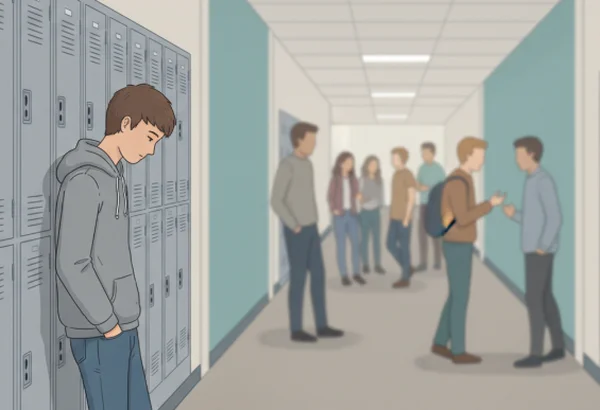
School Challenges and Social Development in Adolescents with AVPD
The school environment is a significant challenge for adolescents with avoidant traits. While other students learn how to navigate social hierarchies, the adolescent with AVPD is often in "survival mode." They may struggle with:
- Group projects: The fear of contributing "stupid" ideas can lead to total silence or skipping school on presentation days.
- Cafeteria anxiety: The simple act of finding a place to sit can feel like a public trial.
- Teacher interactions: Asking for help might feel impossible because it draws attention to a perceived lack of knowledge.
These challenges can lead to academic underachievement. This usually happens not because of a lack of ability, but because the social cost of participation is simply too high.
Differentiating Normal Adolescent Awkwardness from Clinical AVPD Patterns
How do you know if it is just "being a teen" or something more? Adolescence is naturally a time of self-consciousness. However, normal awkwardness is usually temporary and shifts depending on the situation. AVPD patterns are pervasive, rigid, and long-lasting.
A teenager with normal social anxiety might feel better once they are with close friends. Someone with AVPD traits often feels judged even by those closest to them. They constantly scan for signs of rejection, even in safe environments. If these patterns of avoidance affect a young person's ability to function daily, it is time to look closer at the symptoms.
Adult Manifestations: How AVPD Evolves in Adulthood
As we move into adulthood, the "playground" changes, but the fear remains. In adulthood, AVPD symptoms often become more sophisticated. Adults learn to "mask" or hide their avoidance, but the internal struggle often intensifies. The stakes of life—careers, long-term partners, and independent living—become much higher.

Career Development and Workplace Relationships
In the professional world, high functioning AVPD is a common phenomenon. Many adults with AVPD are technically very capable but find themselves stuck in "safe" roles. They may avoid:
- Applying for promotions that require leading a team.
- Speaking up in meetings, even when they have the correct answer.
- Networking events or office social gatherings.
The fear of being "found out" as incompetent or unlikable keeps them in positions where they are overqualified but socially invisible. This often leads to a deep sense of frustration and wasted potential. To better understand how these traits affect your professional life, you can use our tool for a confidential check-up.
Romantic Relationships and Intimacy Challenges in Adulthood
For many adults with AVPD, romantic relationships are the ultimate hurdle. The paradox of AVPD is a deep longing for connection paired with an equal fear of intimacy. Intimacy requires being "seen," and for someone with AVPD, being seen feels like being exposed.
They may avoid dating altogether or "sabotage" relationships when things become too serious. Common behaviors include withdrawing when a partner shows affection or assuming that a partner is secretly disgusted by them. Understanding these avoidant personality traits is essential for anyone trying to build a healthy, lasting connection.
Social Anxiety vs. AVPD: Distinguishing in Adulthood
One of the most frequent questions adults ask is: "Do I have social anxiety or AVPD?" While they look similar, they are different at their core. Social anxiety is often about the performance, such as the fear of shaking during a speech. AVPD is about the self and a person's entire identity.
In adulthood, an individual with social anxiety might realize their fear is irrational. An individual with AVPD usually believes their fear is a logical reaction to being "unworthy" of social inclusion. Because AVPD is an identity-based struggle, it requires a specific approach to understanding and management.
Developmental Trajectories and Progression Over Time
AVPD is not a static condition. It reacts to the world around it. As a person moves through different decades of life, the expression of their symptoms can change based on their environment, stress levels, and life choices.
The Impact of Life Events on AVPD Symptom Expression
Major life changes often act as triggers for avoidant behavior. For example, moving to a new city without a social safety net can cause a person to retreat into total isolation. Conversely, a supportive and stable environment—such as a non-judgmental workplace—can sometimes help "dampen" the symptoms.
Negative life events, such as a painful breakup or a job loss, can confirm an avoidant person's deepest fears. These events can lead to a downward spiral of increased avoidance and deeper depression if not addressed early on.
High Functioning AVPD: When Traits Remain Hidden for Decades
Some individuals manage to live successful lives on the surface. This is known as high functioning AVPD. They go to work, pay their bills, and might even be married. However, inside, they feel like an impostor.
They may rely on strict routines to avoid unpredictable social interactions. Despite appearing fine to the outside world, they often suffer in silence for decades. The reason? They don't believe their struggle is "real enough" to warrant seeking help. If you feel like you are just "acting" your way through life, try our free tool to see what is happening beneath the surface.
Natural Maturation vs. Therapeutic Progress: What Changes with Age?
Does AVPD go away with age? Research suggests that some personality traits "mellow" as we get older. We might become more stable or less impulsive. However, for AVPD, age alone is rarely a cure. Without intervention, the walls we build to protect ourselves often become thicker and harder to break down over time.
Therapeutic progress can drastically change this trajectory. Learning to challenge the "inner critic" and taking managed social risks can help an adult with AVPD reclaim their life. The goal is not to become a perfect extrovert, but to reach a place where fear no longer dictates every life choice.
Conclusion: Your Path to Understanding Across Life Stages
Living with AVPD means navigating challenges throughout your life, but you don't have to face them alone. Whether you're noticing these patterns in your teenager or recognizing them in yourself, that moment of understanding—of putting a name to what you've been feeling—can be the first powerful step toward change.
We have explored how these symptoms move from the schoolyard to the boardroom. No matter which stage of life you are in, it is never too late to seek a better understanding of your mental health.
To take that first step in a safe and anonymous way, we invite you to take an avpd test today. By identifying these patterns now, you can begin to move toward a future where you are defined by your potential, rather than your fears.
The Takeaway
How can I tell if my teenage child's social withdrawal is just shyness or could be AVPD?
Normal shyness usually lessens as a child becomes familiar with a person or environment. AVPD is characterized by a pervasive pattern of feeling inadequate and being extremely sensitive to negative evaluation. If your child avoids activities they enjoy because they are afraid of being judged, it may be more than just shyness. You can encourage them to learn more through an avpd test.
Do AVPD symptoms get worse with age if untreated?
They don't necessarily increase in intensity, but they can become more "entrenched." As people get older, they often build their lives around their avoidance, such as choosing remote work or avoiding dating. This makes it harder to change the behavior later because the comfort zone has become very small. Early self-awareness is key to preventing this shrinking of one's world.
Can someone develop AVPD later in adulthood, or is it always present from childhood?
According to clinical standards, personality disorders are typically recognized by early adulthood and have roots in childhood or adolescence. While a person might not feel the full impact until the demands of adult life increase, the underlying traits—like the fear of rejection and feelings of inadequacy—are usually present from a young age.
What are the most effective interventions at different life stages?
For adolescents, school-based support and social skills training are highly effective. For adults, Cognitive Behavioral Therapy (CBT) is often used to challenge the negative self-talk that fuels avoidance. Regardless of age, the first step is recognizing the pattern. Using a confidential screening tool can help individuals prepare for a productive conversation with a mental health professional.