AVPD & Co-Occurring Disorders: Anxiety, Depression, and More
Feeling overwhelmed by symptoms that seem to overlap and blend together? If you’re struggling with what feels like a constant mix of social avoidance, persistent worry, and deep sadness, you are not alone. Many individuals who experience traits of Avoidant Personality Disorder (AVPD) also face other mental health challenges, most commonly anxiety and depression.
This guide is here to help you explore these common connections. We will look at why these conditions often appear together, how to tell their core symptoms apart, and what practical steps you can take toward understanding your unique experience. Gaining clarity is the first step on a path to feeling better. For a confidential starting point, you can always explore our free AVPD test to gain personal insights.
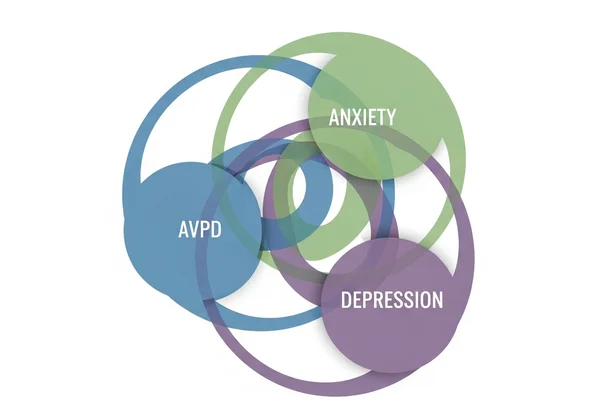
Understanding AVPD with Anxiety & Depression Overlap
It’s incredibly common for someone with AVPD traits to also experience significant symptoms of anxiety and depression. This overlap isn't a coincidence; these conditions often fuel one another in a challenging cycle. Understanding this relationship can reduce feelings of confusion and self-blame, empowering you to see the bigger picture of your mental health.
Why Do AVPD and Mood/Anxiety Disorders Often Co-Occur?
The connection between AVPD, anxiety, and depression is deep-rooted. They often share underlying causes and reinforce each other's symptoms.
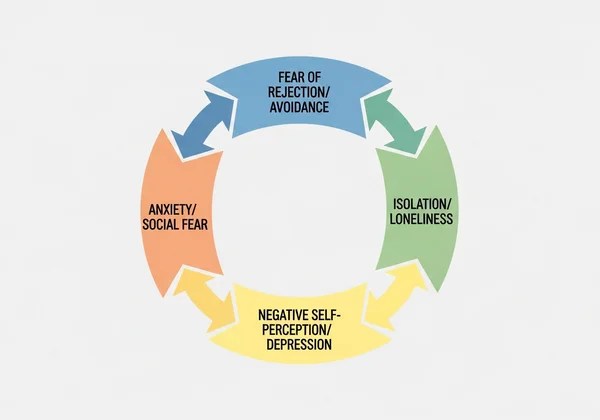
- The Cycle of Avoidance and Isolation: AVPD stems from an intense fear of rejection. Though avoiding social situations may ease anxiety short-term, it often causes profound loneliness—a major risk factor for depression.
- Shared Core Beliefs: All three conditions are often built on a foundation of negative self-perception. Beliefs like "I am not good enough," "I am unlovable," or "Something is wrong with me" are central to avoidant personality disorder. These same thoughts can trigger the persistent worry seen in anxiety and the feelings of worthlessness common in depression.
- Anxiety as a Symptom: The intense fear of social judgment in AVPD naturally produces anxiety. Before, during, and after any social interaction, a person with AVPD traits might experience overwhelming anxiety. Over time, this chronic state of high alert can be emotionally and physically exhausting.
Think of it like this: AVPD provides the script (fear of rejection), anxiety is the stage fright before the performance, and depression is the emptiness felt when you never go on stage at all.
Differentiating Core Symptoms: Is it AVPD, Anxiety, or Depression?
Telling these conditions apart can be tricky because their symptoms look similar on the surface. However, the motivation behind the feelings and behaviors is often the key difference.
Here’s a simple way to look at their distinct focuses:
- AVPD's Core Focus: Fear of Rejection and Intimacy. The primary driver is a deep-seated feeling of personal inadequacy. You avoid relationships not just because you're nervous, but because you're convinced that if someone gets to know the "real you," they will inevitably reject you. The avoidance is pervasive across most areas of your life involving close connection.
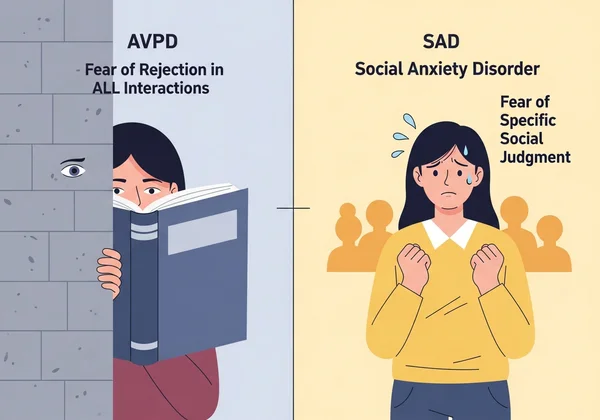
- Anxiety's Core Focus: Fear of Threat and Uncertainty. Generalized Anxiety Disorder (GAD) involves excessive worry about many different things—finances, health, work, and the future. Social Anxiety Disorder (SAD) specifically focuses on the fear of being judged or embarrassing yourself in performance-based social situations. While related, the fear in SAD is often about the situation, whereas in avoidant personality disorder it’s about your fundamental self-worth.
- Depression's Core Focus: Persistent Low Mood and Loss of Interest. The defining feature of depression is a lasting feeling of sadness, emptiness, or hopelessness. It also involves a loss of pleasure in activities you once enjoyed (anhedonia). While social withdrawal is common in depression, it's often due to a lack of energy and motivation, rather than a primary fear of rejection.
If you are trying to make sense of your own feelings, a structured self-assessment can be a helpful tool. The online AVPD test can provide a clearer picture of potential avoidant traits.
Beyond Common Co-Occurrences: Other Mental Health Connections
While anxiety and depression are the most frequent companions to AVPD, the web of connections can be broader. Understanding these other relationships, especially the crucial difference between AVPD and Social Anxiety Disorder, is vital for true self-understanding.
AVPD vs. Social Anxiety Disorder: Unpacking the Differences
This is one of the most common areas of confusion, and for good reason. Both involve intense fear in social settings. However, their foundations are different.
| Feature | Social Anxiety Disorder (SAD) | Avoidant Personality Disorder (AVPD) |
|---|---|---|
| Primary Fear | Fear of being judged, scrutinized, or embarrassed in specific social or performance situations. | Fear of rejection, criticism, or disapproval in close relationships, stemming from a core belief of being inferior. |
| Self-Concept | You might feel confident in other areas of life, but believe you lack social skills. | You often hold a pervasive, deeply negative view of your entire self as inadequate and unlikable. |
| Desire for Connection | You generally desire relationships but fear the social situations required to build them. | You deeply crave connection but avoid it because you feel unworthy and are certain of rejection. |
| Scope of Avoidance | Avoidance is often tied to specific triggers like public speaking, parties, or meeting new people. | Avoidance is broader and affects nearly all aspects of life, including work opportunities and intimate relationships. |
In short, someone with SAD might think, "I'm afraid I'll say something stupid at the party." Someone with AVPD is more likely to think, "I can't go to the party because if anyone gets to know me, they'll realize how worthless I am and want nothing to do with me."
Exploring Connections with Other Avoidant Personality Traits
Avoidance is a natural response to pain. But with personality disorders, this coping mechanism becomes rigid and life-disrupting. AVPD is the primary diagnosis centered on this trait, but avoidant behaviors can also appear in other contexts. Recognizing this pattern in yourself is an important insight, whether it points toward avoidant personality disorder or simply highlights a key area for personal growth. An objective look at these patterns through a confidential AVPD screening tool can be a valuable first step.
Navigating Co-Occurring Conditions: Practical Coping & Support
Living with overlapping symptoms is difficult, but there are ways to manage them and move forward. The goal is not to erase these feelings overnight but to build resilience and develop healthier coping strategies.
Effective Strategies for Managing Overlapping Symptoms
When you're dealing with AVPD, anxiety, and depression at once, a gentle and compassionate approach is essential.
- Practice Mindful Self-Compassion: The voice of an inner critic is often loud in these conditions. Instead of fighting it, try to acknowledge it with kindness. Treat yourself with the same compassion you would offer a friend who is struggling.
- Keep a Simple Thought Journal: You don't need to write pages. Just jot down a situation that caused distress, the thought that came with it (e.g., "They think I'm boring"), and the feeling it created (e.g., sadness, anxiety). This practice helps you see the connection between your thoughts and feelings without judgment.
- Identify "Small Wins": The idea of overcoming social avoidance can feel impossible. Break it down into tiny, manageable steps. Your goal for the week could simply be to make eye contact and smile at a cashier, or to send a one-sentence text to a friend. Celebrate these small victories.
- Grounding Techniques for Anxiety: When anxiety spikes, bring yourself back to the present moment. Use the 5-4-3-2-1 method: name five things you can see, four things you can feel, three things you can hear, two things you can smell, and one thing you can taste.
When to Seek Professional Help: Your Path Forward
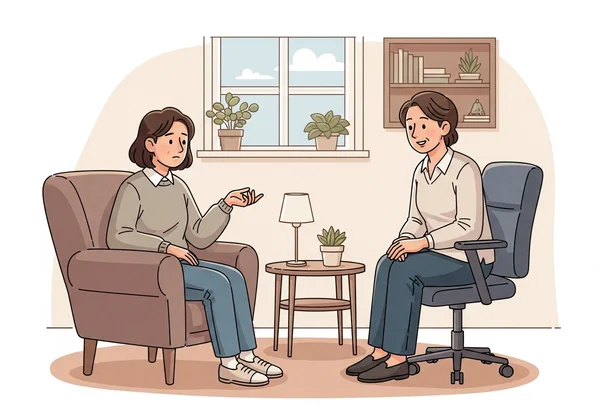
Self-help strategies are valuable, but they are not a substitute for professional support, especially when dealing with complex, co-occurring conditions. Online tools are for self-exploration, not diagnosis.
Consider seeking help from a therapist or counselor if:
- Your symptoms are causing significant distress in your daily life.
- You are struggling to maintain relationships, work, or school commitments.
- You feel stuck and unable to make progress on your own.
- You are using unhealthy coping mechanisms like substance use to manage your feelings.
A mental health professional can provide an accurate diagnosis and develop a treatment plan tailored to your unique needs. Therapies like Cognitive-Behavioral Therapy (CBT), Schema Therapy, and Dialectical Behavior Therapy (DBT) have been shown to be effective for managing these interconnected conditions.
Taking the First Step: Understanding Your Unique Mental Health Profile
Untangling AVPD, anxiety, and depression can feel overwhelming—like sorting through knotted threads. Your courage to seek clarity is the first step forward. The symptoms overlap, the feelings are overwhelming, and it's hard to know where one issue ends and another begins.
Understanding your unique mental health patterns helps dismantle shame and opens doors to meaningful support. Recognizing that these conditions often coexist is validating. Learning to spot the subtle differences between them is empowering, and knowing that there are practical steps you can take—both on your own and with professional support—provides hope.
Your journey to clarity doesn't have to be a leap. It can start with a single, private step. If you're ready to better understand how avoidant personality traits may be influencing your life, start your test today. Our confidential and free assessment is designed to give you a clear, immediate starting point for your path forward.
Your Questions About AVPD & Co-Occurring Conditions Answered
Do I have social anxiety or AVPD if my symptoms overlap?
It can be very difficult to self-diagnose due to the significant overlap. The key difference often lies in the core belief: SAD is a fear of judgment in social situations, while avoidant personality disorder is a pervasive fear of rejection in close relationships due to a deep sense of personal inadequacy. A professional diagnosis is the best way to get a clear answer.
What are the common AVPD symptoms that might be mistaken for depression or anxiety?
Social withdrawal is a primary example. In AVPD, it's driven by fear of rejection. In depression, it's often due to low energy and loss of interest. Similarly, constant worrying in avoidant personality disorder is focused on being disliked, while in generalized anxiety, it can be about a wide range of topics like health, work, or finances.
How can I help myself if I suspect I have AVPD alongside another mental health condition?
Start by being compassionate with yourself and acknowledging the challenge. Gentle self-help strategies like journaling and mindfulness can be helpful. However, due to the complexity of co-occurring conditions, seeking an assessment from a mental health professional is a crucial step for effective treatment.
Is taking an online AVPD test still useful if I am already diagnosed with anxiety or depression?
Yes, absolutely. If your diagnosis doesn’t fully explain struggles with intimacy or self-worth, a screening tool can help uncover deeper insights. Taking a confidential online AVPD test can help you and your therapist explore whether underlying personality traits are contributing to your ongoing challenges.