List of Avoidance Behaviors: Adult, Relationship, and Anxiety Patterns
Avoidance can look quiet from the outside: a delayed reply, a canceled plan, a task left untouched, a joke that changes the subject. Inside, it often feels like relief. This list of avoidance behaviors is meant to help you notice patterns without turning them into a harsh label. Some avoidance is sensible, such as staying away from real danger. The concern is repeated avoidance that shrinks your life, strains relationships, or keeps fear from being tested against reality. If social avoidance, fear of rejection, and self-doubt are part of the pattern, a private AVPD traits screener can be one educational way to organize what you are noticing.
What Counts as Avoidance Behavior?
Avoidance behavior is any repeated action, delay, distraction, or withdrawal used to escape a feared situation, uncomfortable emotion, bodily sensation, memory, conflict, responsibility, or possible rejection. In psychology, avoidance can function as coping, a fear response, a personality style, or part of anxiety-related patterns. It is not automatically a character flaw. Often it begins as a smart protective move: the person learns that stepping away lowers distress quickly.
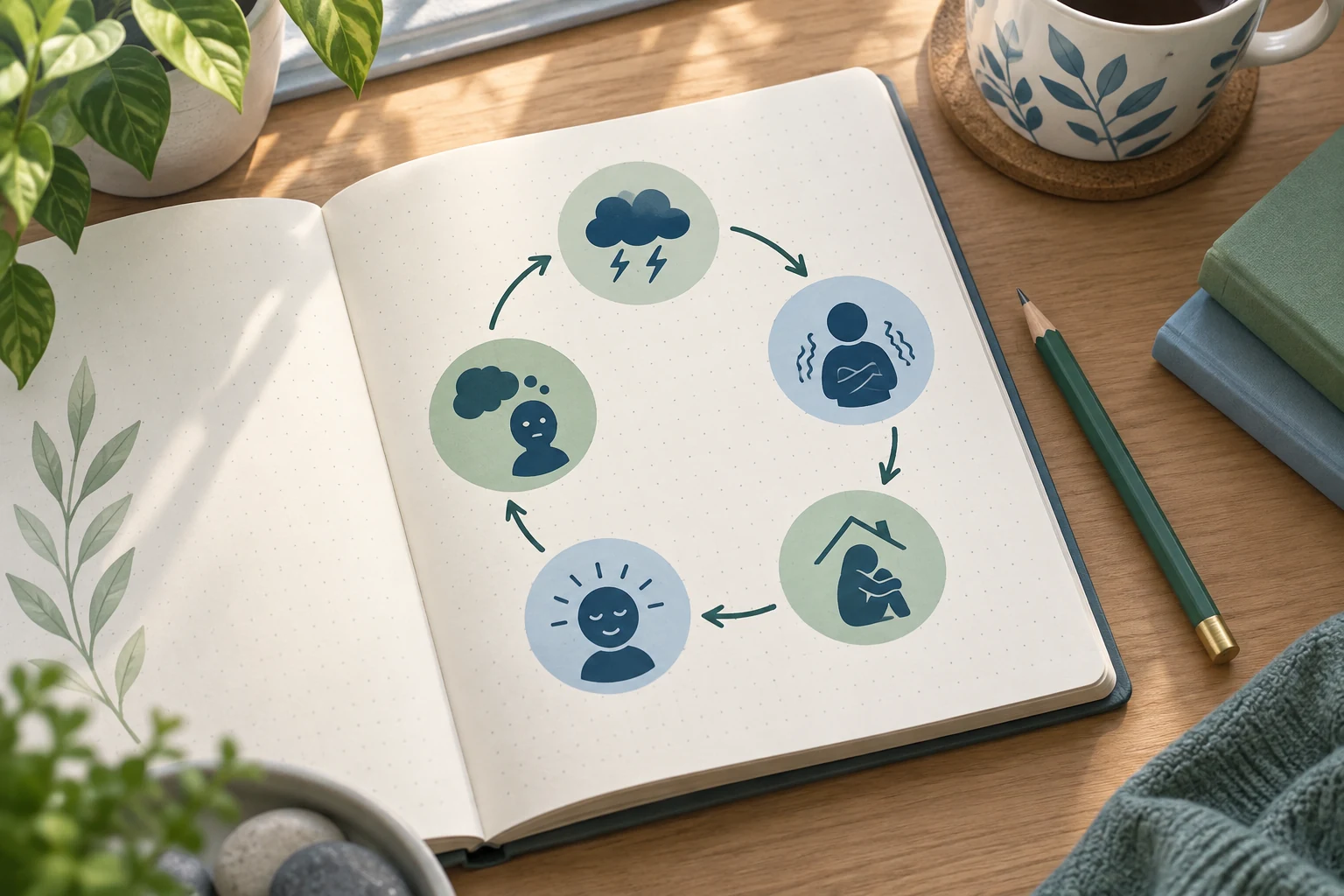
The problem is the tradeoff. Short-term relief can teach the brain, "I survived because I escaped." Over time, the avoided task or relationship moment may feel even more threatening. This is the avoidance cycle: trigger, discomfort, escape, relief, then stronger fear the next time. Breaking the cycle of avoidance usually means replacing all-or-nothing escape with smaller, safer steps toward the thing being avoided.
A Practical List of Avoidance Behaviors in Adults
Adults often avoid in ways that appear productive, polite, independent, or simply "busy." The behavior matters less than the function it serves. If it protects you from discomfort again and again, it may belong on your personal list.
- Procrastinating on work, bills, messages, appointments, or decisions until pressure becomes unavoidable.
- Canceling plans, arriving late, leaving early, or keeping social commitments vague.
- Ignoring calls, texts, emails, or invitations because replying feels exposing.
- Staying constantly busy so there is no quiet time to feel sadness, shame, anger, or loneliness.
- Over-researching, over-planning, or waiting for perfect certainty before taking action.
- Avoiding eye contact, small talk, meetings, presentations, dates, or group events.
- Changing the subject when a conversation becomes emotional or personally revealing.
- Agreeing too quickly, people-pleasing, or saying "I'm fine" to avoid conflict.
- Using screens, gaming, scrolling, shopping, eating, alcohol, or other distractions to numb distress.
- Sleeping excessively, zoning out, daydreaming, or mentally checking out.
- Avoiding medical, financial, legal, academic, or workplace tasks because they trigger fear.
- Rehearsing conversations silently but never having them.
- Ghosting, distancing, or ending relationships before the other person can reject you.
- Choosing only familiar routines, places, roles, or people to avoid uncertainty.
- Avoiding positive opportunities because being seen, praised, or expected to perform feels risky.
None of these behaviors proves a disorder on its own. Context matters. Frequency, intensity, distress, and impact matter. A person who avoids one party after a hard week is different from someone whose world has become smaller for years.
Five Common Types of Avoidance Behavior
Many examples fit into five broad types. These categories are useful because they show that avoidance is not only "not going somewhere."
Situational Avoidance
Situational avoidance means staying away from specific places, people, activities, or conversations. In adults, this may include avoiding dating, networking events, family gatherings, elevators, highways, doctors' offices, performance reviews, or any setting linked with embarrassment or criticism. In relationships, it may look like dodging serious talks because the emotional stakes feel too high.
Cognitive Avoidance
Cognitive avoidance is the attempt to push away thoughts, memories, doubts, or images. It can look like forcing yourself not to think about a mistake, using constant entertainment to block worry, or mentally going blank when a topic feels painful. Some people mistake cognitive avoidance for calmness because nothing visible is happening, but internally the mind is working hard to keep material out of awareness.

Protective Avoidance and Safety Behaviors
Protective avoidance uses extra rules to create a sense of safety. A person might reread a message 20 times, bring a friend everywhere, sit near exits, check repeatedly for mistakes, or rehearse every possible response. These safety behaviors can reduce anxiety for the moment, but they may also prevent the person from learning that they could cope without the ritual.
Somatic Avoidance
Somatic avoidance is avoiding body sensations associated with fear. Someone might avoid exercise because a racing heart reminds them of panic, avoid public speaking because blushing feels unbearable, or avoid excitement because it resembles anxiety. This type is common in anxiety avoidance behavior because the body itself becomes part of the feared experience.
Substitution and Emotional Avoidance
Substitution avoidance replaces one feeling with another activity or emotion. Work, humor, anger, food, substances, fantasy, or caretaking can all become ways to avoid grief, shame, fear, or vulnerability. The substitute may not be harmful every time. It becomes a problem when it is the only route away from discomfort.
Avoidance Behavior in Relationships
Avoidance behavior in relationships often centers on the risk of being known. A person may want closeness but pull back when closeness becomes real. This is why avoidant behavior examples in relationships can seem contradictory: someone may crave reassurance but ignore a loving message, want repair but avoid the conversation, or feel lonely while declining invitations.
Common relationship patterns include delaying replies to avoid saying the wrong thing, minimizing needs, avoiding labels or commitment, withdrawing after conflict, keeping conversations practical, ending relationships early, or choosing emotionally unavailable partners. For people with strong rejection sensitivity, the imagined pain of disapproval can feel more immediate than the long-term cost of distance.
Attachment language can be helpful, but it should be used carefully. A list of avoidant attachment behaviors is not the same thing as a personality assessment. Attachment patterns describe relational strategies; AVPD traits involve a broader pattern of social inhibition, feelings of inadequacy, and fear of negative evaluation. If those themes feel familiar, an educational AVPD self-reflection tool may help you separate relationship habits from wider avoidance patterns.
Work, Tasks, and Everyday Responsibilities
Task avoidance is one of the easiest forms to moralize and one of the most important to understand. Avoiding work does not always mean laziness. It can be driven by shame, perfectionism, fear of feedback, decision fatigue, depression, trauma reminders, overwhelm, or a history of being criticized. The avoided task becomes emotionally loaded, not merely inconvenient.
Look for the moment just before avoidance. Do you imagine failing? Being judged? Feeling trapped? Having to make a final choice? Do you tell yourself you need one more plan, tool, video, or article before beginning? Avoidance coping often hides inside preparation. The clue is whether preparation moves you toward action or protects you from action.
A useful first step is to make the task smaller than your fear expects. Open the document for two minutes. Draft the first imperfect sentence. Send a short reply. Put the bill on the desk. These steps are not magic, and they are not a substitute for professional support when distress is severe. They simply give your nervous system new data: approaching in small doses can be survivable.

The Avoidance Cycle: Why Relief Can Keep the Pattern Going
The cycle of avoidance is powerful because it rewards escape immediately. Suppose you avoid a difficult conversation. Your anxiety drops, so your brain records avoidance as the successful strategy. But the relationship issue remains, and the next conversation may feel more dangerous because you have less recent evidence that you can handle it.
The same loop can happen with work, social plans, body sensations, and memories. Trigger appears. Anxiety, shame, dread, or physical discomfort rises. Avoidance lowers distress. Relief reinforces the behavior. Confidence shrinks. The next trigger feels larger.
Breaking the cycle of avoidance does not mean forcing yourself into overwhelming situations. In evidence-based therapies, approaches such as cognitive behavioral therapy and exposure-based work are often paced, planned, and supported. The everyday lesson is similar: choose a step small enough to try and meaningful enough to teach you something. A cycle of avoidance worksheet can help if it tracks four simple items: trigger, feeling, avoidance behavior, and short-term relief versus long-term cost.

How to Start Breaking the Cycle of Avoidance
Begin with observation, not accusation. For one week, write down moments when you avoided something and what the avoidance protected you from feeling. Use plain language: "I did not reply because I feared sounding needy" is more useful than "I am broken."
Next, sort avoidance into three groups. First, harmless preferences: things you simply do not value. Second, protective boundaries: situations that are genuinely unsafe, exploitative, or not yours to fix. Third, fear-based avoidance: things that matter to you but feel threatening because of rejection, failure, uncertainty, or strong emotion.
For the third group, try a graded approach. Pick one small action that is uncomfortable but not overwhelming. Pair it with grounding, a time limit, or support from a trusted person. Afterward, record what happened rather than whether it felt easy. Progress often begins when the goal changes from "feel no anxiety" to "act gently while anxiety is present."
Professional help is worth considering when avoidance blocks work, school, health care, relationships, leaving home, sleep, or basic responsibilities; when it follows trauma; or when depression, panic, substance use, or thoughts of self-harm are present. A qualified mental health professional can help tailor support to your situation.
Using the List Without Turning It Into a Label
A list of avoidance behaviors is most helpful when it becomes a map, not a verdict. Notice the pattern, the trigger, the relief, and the cost. Ask what the behavior has been trying to protect. Then ask what a smaller, kinder approach step might look like. This keeps the focus on learning instead of self-blame.
If your avoidance is tied to fear of rejection, social withdrawal, or the sense that you are never acceptable enough, it may help to review a structured AVPD traits overview as a starting point for reflection. Online tools can organize questions and language, but they cannot replace a professional evaluation or care. The real aim is not to force yourself into every feared situation. It is to build a life where fear has input, not total authority.

FAQ
What are the five types of avoidance behavior?
Five useful types are situational avoidance, cognitive avoidance, protective avoidance or safety behaviors, somatic avoidance, and substitution or emotional avoidance. These categories overlap. For example, avoiding a date may be situational, but using humor to dodge vulnerability during the date may be emotional avoidance.
What is the root cause of avoidance?
There is not one root cause for everyone. Avoidance can grow from anxiety, shame, trauma, rejection sensitivity, perfectionism, depression, learned family patterns, low self-worth, or repeated experiences of criticism. The common thread is that avoidance reduces distress in the short term, which teaches the pattern to repeat.
How can someone reduce avoidance safely?
Start by identifying the trigger, the feeling, the avoidance behavior, and the cost. Then choose a small approach step that is challenging but manageable. If the avoidance is severe, trauma-related, or affecting daily functioning, it is safer to work with a qualified mental health professional instead of trying to push through alone.
Is avoidance always unhealthy?
No. Avoiding real danger, respecting your limits, and leaving harmful situations can be healthy. Avoidance becomes more concerning when it repeatedly blocks valued relationships, work, health care, learning, or ordinary life tasks even when the situation is not actually unsafe.
What is the difference between avoidance coping and healthy coping?
Avoidance coping mainly aims to escape discomfort. Healthy coping helps you regulate discomfort while still facing reality in some workable way. Journaling, grounding, asking for support, taking breaks, and setting boundaries can be healthy when they help you return to the issue rather than disappear from it permanently.
What are examples of anxiety avoidance behavior?
Examples include skipping social events, avoiding presentations, delaying medical visits, not opening messages, steering clear of places linked with panic, or using safety behaviors such as excessive checking. The pattern is usually driven by fear of anxiety itself or fear of what the anxiety might mean.
When should avoidance get professional attention?
Consider professional support if avoidance is shrinking your world, harming relationships, interfering with work or school, preventing health care, following trauma, or appearing alongside panic, depression, substance use, or thoughts of self-harm. Support can make approach steps more paced, specific, and compassionate.