Personality Disorder Clusters Explained by DSM-5 Groups A, B, and C
Personality disorder clusters are a way to organize several long-term patterns of thinking, feeling, and relating. They can help readers understand why some conditions seem marked by distrust, others by emotional intensity, and others by fear or avoidance. Still, the clusters are only an educational map. They are not a shortcut to a formal diagnosis, and many people have traits that cross group boundaries. If you are mainly trying to understand avoidant traits, social withdrawal, or fear of rejection, a private AVPD traits screening can be a gentle place to organize what you notice before reading further or speaking with a professional.
What Personality Disorder Clusters Mean in DSM-5
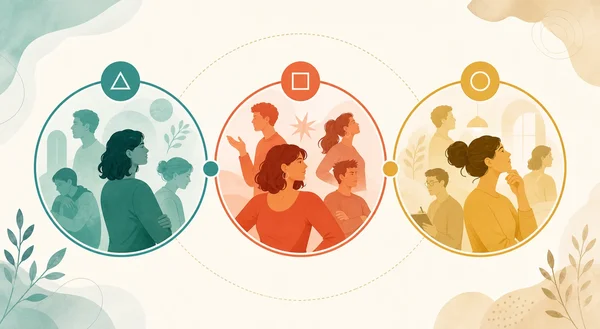
In DSM-5 and DSM-5-TR language, personality disorders are grouped into three clusters because some conditions share broad styles. Cluster A is often described as odd or eccentric. Cluster B is often described as dramatic, emotional, or erratic. Cluster C is often described as anxious or fearful. These descriptions are shorthand, not judgments about a person.
The cluster system matters because many searches begin with simple questions: what are the three personality disorder clusters, how many clusters of personality disorders are there, and what are the 10 personality disorders? A clear answer starts with the list, then adds caution. The categories describe patterns that may be stable, distressing, and hard to shift without support. They do not explain a whole person, a life history, or every symptom.
The ten personality disorders by cluster
| Cluster | Broad style | Personality disorders usually listed |
|---|---|---|
| Cluster A | Odd, eccentric, or distrustful patterns | Paranoid, schizoid, schizotypal |
| Cluster B | Emotional intensity, impulsivity, or unstable relationships | Antisocial, borderline, histrionic, narcissistic |
| Cluster C | Anxiety, fear, avoidance, or control | Avoidant, dependent, obsessive-compulsive personality disorder |
Obsessive-compulsive personality disorder is not the same as obsessive-compulsive disorder. The first is a personality pattern involving perfectionism, control, and rigidity; the second is an anxiety-related condition involving obsessions and compulsions.

Cluster A Personality Disorders: Unusual or Distrustful Patterns
Cluster A personality disorders include paranoid, schizoid, and schizotypal personality disorders. The shared theme is often social distance, unusual beliefs or perceptions, or a strong tendency to interpret others as unsafe. A person may seem guarded, detached, suspicious, or difficult to read.
Paranoid personality disorder is associated with persistent mistrust. Schizoid personality disorder is associated with emotional distance and limited interest in close relationships. Schizotypal personality disorder may involve unusual thinking, odd speech, social anxiety, and discomfort in close connection. These summaries are simplified; real assessment looks at duration, impairment, context, culture, and other possible explanations.
For readers, the important point is that Cluster A is not simply "being introverted." Introversion can be healthy and chosen. Cluster A patterns are more likely to involve distress, misunderstanding, isolation, or a stable pattern that causes problems across many settings.
Cluster B Personality Disorders: Emotion, Impulsivity, and Relationship Intensity
Cluster B personality disorders include antisocial, borderline, histrionic, and narcissistic personality disorders. Searchers often focus on Cluster B because the behaviors can be visible in relationships: fast emotional shifts, impulsive choices, intense conflict, attention-seeking, unstable identity, boundary problems, or low empathy in some situations.
Borderline personality disorder is often associated with intense fear of abandonment, rapidly changing relationships, self-image instability, and strong emotional pain. Histrionic personality disorder is associated with a strong need for attention and expressive emotional behavior. Narcissistic personality disorder may involve grandiosity, sensitivity to criticism, and difficulty recognizing others' needs. Antisocial personality disorder may involve disregard for rules or the rights of others.
Cluster B language is often used harshly online. A better use is educational: it can name broad patterns while still leaving room for trauma history, culture, stress, substance use, mood disorders, and individual differences. Treatment planning should focus on a person's actual difficulties, not just a cluster label.
Cluster C Personality Disorders: Fear, Avoidance, and Control
Cluster C personality disorders include avoidant, dependent, and obsessive-compulsive personality disorder. This group is especially relevant for people who search for personality disorder clusters c, avoidant patterns, or the difference between fear-based withdrawal and other personality styles.
Avoidant personality disorder involves long-standing social inhibition, feelings of inadequacy, and sensitivity to possible rejection. Dependent personality disorder involves a strong need to be cared for, difficulty making decisions alone, and fear of separation. Obsessive-compulsive personality disorder involves preoccupation with order, rules, control, and perfectionism.
Cluster C can look quiet from the outside, but it can be deeply painful. Someone with avoidant traits may want connection yet pull back because possible criticism feels overwhelming. Someone with dependent traits may stay in harmful dynamics because separation feels unbearable. Someone with obsessive-compulsive personality traits may feel trapped by standards that leave little room for ease. If avoidant traits are the pattern you are trying to understand, an avoidant personality self-reflection tool may help you name themes without turning self-reflection into self-labeling.
BPD, DPD, and AVPD: Why Names Can Sound Similar
Personality disorder names can overlap in everyday language. BPD usually means borderline personality disorder, while DPD usually means dependent personality disorder. AVPD means avoidant personality disorder. They can all involve fear, attachment pain, or relationship stress, but the core pattern is different.
| Term | Usually refers to | Common relationship theme |
|---|---|---|
| BPD | Borderline personality disorder | Intense emotion, abandonment fear, unstable closeness |
| DPD | Dependent personality disorder | Fear of separation and difficulty acting independently |
| AVPD | Avoidant personality disorder | Desire for connection mixed with rejection fear and withdrawal |
This distinction matters because two people may both fear rejection but need different kinds of support. One may need help with emotional regulation and relationship stability. Another may need help tolerating independence. Another may need gradual practice with safe connection and self-worth. Labels are less useful than the pattern behind the distress.
Causes and Treatment: Why Clusters Are Only a Starting Point
People also ask about the causes of personality disorders. Research and clinical education usually point to several interacting factors rather than one single cause. Five common contributors include inherited temperament, early attachment experiences, childhood adversity, long-term invalidation or stress, and social environment. These factors do not make any outcome inevitable. They only help explain why certain traits may become rigid over time.
Treatment also depends on the person, the pattern, and any co-occurring concerns such as anxiety, depression, trauma symptoms, substance use, or self-harm risk. Psychotherapy is often central. Skills-based therapies may help with emotion regulation, relationship patterns, and distress tolerance. Longer-term therapy may focus on identity, attachment, shame, and recurring interpersonal themes. Medication may be used for co-occurring symptoms, but it is not usually the main answer for personality patterns themselves.
The safest takeaway is that personality disorder clusters can guide questions, not decide care. A professional evaluation can consider history, culture, current stress, risk, strengths, and goals. If symptoms involve self-harm thoughts, violence risk, severe impairment, or crisis-level distress, urgent local support is more appropriate than online reading.

Using Personality Disorder Clusters for Safer Self-Reflection
The most helpful way to use personality disorder clusters is to ask better questions. Which patterns repeat across settings? Which reactions feel automatic? Which fears are strongest: being rejected, being abandoned, losing control, being exposed, being used, or being alone? What helps you stay connected without overwhelming yourself or someone else?
For AVPD-related concerns, the Cluster C frame can be useful because it separates avoidant patterns from Cluster A detachment and Cluster B instability. Avoidance is not always lack of interest. Sometimes it is a protective strategy shaped by shame, rejection sensitivity, and low trust in acceptance. A structured AVPD learning hub can support private reflection, but it should sit alongside real-world support when distress is persistent or life-limiting.
Try a brief reflection checklist:
- Write down the situations you avoid most often.
- Note the fear that appears before avoidance.
- Look for patterns across work, friendship, family, and dating.
- Notice whether you want closeness, distance, control, reassurance, or relief.
- Bring the pattern, not just the label, into a professional conversation if you seek help.
Personality disorder clusters are useful when they reduce confusion. They become less useful when they turn people into stereotypes. Keep the map, but keep the person bigger than the map.
FAQ
What are cluster A and B and C personality disorders?
Cluster A includes paranoid, schizoid, and schizotypal personality disorders and is often linked with odd, eccentric, or distrustful patterns. Cluster B includes antisocial, borderline, histrionic, and narcissistic personality disorders and is often linked with emotional intensity, impulsivity, or unstable relationships. Cluster C includes avoidant, dependent, and obsessive-compulsive personality disorder and is often linked with anxiety, fear, avoidance, or control.
What is a Cluster B personality disorder?
A Cluster B personality disorder is one of the personality disorders grouped around dramatic, emotional, erratic, or impulsive patterns. The group includes antisocial, borderline, histrionic, and narcissistic personality disorders. The cluster name is only a broad guide; professional assessment looks at the full pattern and the person's life context.
How many personality disorder clusters are there?
There are three personality disorder clusters in the common DSM-5 grouping: Cluster A, Cluster B, and Cluster C. Together they include 10 personality disorders. The three-cluster model is widely used for education, but it does not capture every individual difference.
What are the 10 personality disorders?
The 10 personality disorders commonly listed in DSM-5 cluster education are paranoid, schizoid, schizotypal, antisocial, borderline, histrionic, narcissistic, avoidant, dependent, and obsessive-compulsive personality disorder. They are grouped into three clusters based on broad similarities.
What is the difference between BPD and DPD?
BPD usually refers to borderline personality disorder, which often involves intense emotions, unstable relationships, and abandonment fear. DPD usually refers to dependent personality disorder, which often involves difficulty acting independently and a strong fear of separation. The names sound similar, but they belong to different clusters and point to different patterns.
What is the best treatment for Cluster B personality disorder?
There is no single best treatment for every Cluster B pattern. Psychotherapy is often central, and the approach may vary by needs such as emotion regulation, impulsivity, relationship conflict, trauma history, or risk. A mental health professional can recommend care based on the specific pattern, not only the cluster name.