AVPD Social Connections: Building Safe Friendships When You're Avoidant
Do you ever feel the intense ache of wanting deep connections but are paralyzed by the fear of what others might think? For many with avoidant personality traits, this is a constant, exhausting paradox. You deeply crave meaningful friendships but find yourself held back by an overwhelming fear of judgment, criticism, or rejection. It can feel like being behind a glass wall, able to see the warmth of connection but unable to reach it.
This guide is for you. It's a practical, gentle blueprint for building low-pressure social connections that feel safe and manageable. We will explore strategies designed specifically for avoidant personalities, helping you bridge the gap between isolation and genuine friendship. Before you can build outward connections, understanding your own patterns is a crucial first step. Gaining clarity on your traits through an AVPD assessment can provide a solid foundation for this journey.

Understanding Your Social Avoidance Patterns
Before you can build new social habits, it's vital to understand the old ones. Self-awareness is not about judgment; it's about gaining the knowledge you need to make intentional, positive changes. By recognizing your patterns, you can begin to work with them instead of feeling controlled by them.
Recognizing Triggers That Send You Into Withdrawal Mode
A trigger is anything that activates your impulse to avoid social contact. It could be receiving an unexpected invitation, the thought of making small talk, or even just seeing a group of friends laughing together. These triggers often lead to a "withdrawal mode," where you shut down, cancel plans, or retreat into solitude to feel safe.
Common triggers include:
- Fear of criticism: The possibility of someone disliking what you say or do.
- Perceived social pressure: Feeling you have to be "on" or perform in a certain way.
- Unstructured social events: Parties or large gatherings with no clear purpose can feel chaotic and threatening.
- Vulnerability: The idea of sharing personal thoughts or feelings can feel incredibly risky.
Identifying your personal triggers is the first step toward managing them. Keep a simple journal for a week and note when you feel the urge to withdraw. What was happening at that moment? This awareness is your power.
The Difference Between Social Anxiety and AVPD in Friendships
While they share many similarities, social anxiety and Avoidant Personality Disorder (AVPD) affect friendships in different ways. Social anxiety often centers on the fear of performance and judgment in specific social situations. A person with social anxiety might worry intensely about a party but feel relatively at ease with a close, trusted friend.
AVPD, on the other hand, is a more pervasive pattern. It involves a deep-seated feeling of inadequacy and a core belief that you are fundamentally unlikable. This belief makes all relationships, even close ones, feel threatening. The fear isn't just about a single event; it's about the fear that if someone gets too close, they will inevitably see your flaws and reject you. Understanding this distinction is key. You can explore these traits further to see where your own experiences align. This can provide valuable insights into your social patterns and help guide your approach to building connections.
How Self-Criticism Sabotages Your Social Efforts
The harshest critic for someone with AVPD is usually themselves. This relentless inner voice magnifies every perceived mistake and reinforces the belief that you are not good enough. After a social interaction, you might spend hours replaying it, focusing on what you "should have" said or done differently.
This self-criticism acts as a powerful saboteur. It convinces you that social efforts are pointless because you will always fail. It drains your energy and motivation, making it even harder to try again next time. Learning to challenge this inner critic with more compassionate self-talk is a foundational skill for building the confidence needed for AVPD social connections.
Low-Pressure Social Connection Strategies for Avoidant Personalities
The goal isn't to force yourself into overwhelming situations. Instead, it's about finding environments where you can connect on your own terms. These strategies are designed to be low-pressure, allowing you to build confidence and experience positive social interactions.

Interest-Based Communities: Finding Your People Through Shared Passions
When you connect over a shared interest, the focus is on the activity, not on you. This immediately lowers the social pressure. Whether it's a book club, a hiking group, a board game café, or a pottery class, the shared passion provides a natural topic of conversation. You don't have to worry about what to say; you can simply talk about the book, the trail, or the game. This is a perfect environment for safe socialization and slowly getting to know people without intense one-on-one pressure.
Digital Communities: Building Connections Before Face-to-Face Meetings
For many, online interaction feels much safer than in-person meetings. Digital communities—like forums for a hobby, Discord servers for a favorite game, or online learning groups—allow you to engage from the comfort of your own space. You can think before you type and share at your own pace. These platforms can be a great training ground for social skills and can lead to genuine friendships that may eventually move offline when you feel ready.
Structured Social Settings: Where Comfort Meets Connection
Unstructured events like parties can feel like a nightmare. Structured settings, however, have clear rules and expectations, which can be very comforting. Think of volunteer activities where you have a specific task, workshops where you are there to learn, or team sports with defined roles. The structure removes the guesswork and provides a sense of purpose, allowing you to interact with others in a more predictable and less intimidating way.
The Art of Gradual Exposure: Increasing Social Tolerance Step-by-Step
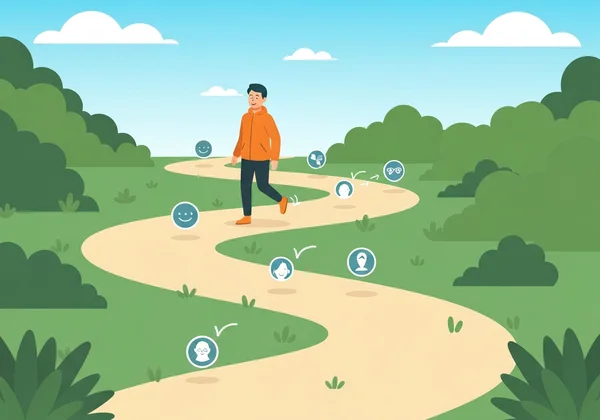
Gradual exposure is about gently and progressively expanding your comfort zone. It’s not about jumping into the deep end; it’s about starting in the shallow water. If the idea of a two-hour coffee date is terrifying, start with a goal of a five-minute chat with a barista. Celebrate that small victory. Next, maybe you'll aim for a brief conversation with a classmate or coworker. Each small, successful step builds social tolerance and proves to your brain that you can handle these situations. This slow, steady approach is essential for long-term avoidant friendship building.
Deepening Connections: Moving Beyond Surface-Level Friendships
Once you've made a few initial connections, the next challenge is deepening them. This can be the most frightening part, as it requires a degree of vulnerability. The key is to proceed at a pace that feels safe for you.
Vulnerability Without Overwhelm: Sharing at Your Own Pace
Vulnerability doesn't mean revealing your deepest secrets all at once. It means sharing small, authentic pieces of yourself over time. You can watch how the other person responds and gradually build trust without feeling overwhelmed or exposed. Start by sharing a simple opinion, a personal preference, or a brief story about your day. If they are receptive and non-judgmental, it's a signal that it's safe to share a little more next time.
Setting Healthy Boundaries That Protect Your Energy
Boundaries are not walls to keep people out; they are guidelines to protect your well-being so you can let the right people in. For someone with avoidant traits, social energy can be a limited resource. It's okay to say "no" to an invitation if you feel drained. It's okay to limit a social outing to one hour. Clearly and kindly communicating your needs (e.g., "I'd love to come, but I can only stay for a little while") is a form of self-respect that good friends will understand and honor.
Handling Rejection Without Withdrawing Completely
Sooner or later, you will experience perceived or real rejection. Someone might be too busy to hang out, or a new friendship might not click. For someone with AVPD, this can feel like a confirmation of your deepest fears, triggering an intense urge to withdraw from everyone. The goal is to learn to handle this without letting it derail all your progress. Remind yourself that rejection is a normal part of life, not a reflection of your worth. It might be about the other person's circumstances, not you. Allow yourself to feel the hurt, but then make a conscious choice to stay connected with other safe people in your life.
Your Journey Toward Meaningful Connections
Building friendships when you have avoidant traits is a journey, not a race. It requires patience, self-compassion, and the right strategies. Your path to connection doesn't require you to become a different person. It’s about creating relationships in a way that respects your unique needs and honors your comfort levels. By starting with low-pressure environments and gradually opening up, you can build authentic, safe friendships that enrich your life.
Understanding yourself is the crucial starting point on your journey to meaningful connections. Knowing your own social patterns is the key to tailoring these strategies effectively. If you're wondering about your own traits, taking a free, confidential online AVPD test can provide powerful insights. Understanding your profile can be the first empowering step toward building the connections you truly deserve.

The Takeaway
Is my shyness actually AVPD affecting my friendships?
Shyness is often discomfort in new social settings that usually fades as you get to know people. AVPD is more pervasive. It involves a deep-seated fear of rejection and feelings of inadequacy that persist even with people you know. If you avoid relationships you want because you believe you are unlikable, it may be more than shyness. An AVPD self-assessment can help clarify these patterns.
Can people with AVPD maintain long-term friendships?
Yes, absolutely. While it requires conscious effort, people with AVPD can form lasting, meaningful friendships. The key is finding friends who are patient, learning skills to manage anxiety, setting boundaries, and challenging negative self-talk. It's a process of building trust, both in others and in yourself.
A social interaction is triggering my avoidance. What should I do?
First, acknowledge the feeling without judgment. Take a few deep breaths to calm your nervous system. You don't have to flee the situation. You could take a short break by going to the restroom or stepping outside for a moment. Remind yourself of a small goal, like staying for just ten more minutes. Grounding yourself in the present can reduce the trigger's power.
How can I tell if someone is truly accepting of me?
An accepting person will respect your boundaries without making you feel guilty. They won't push you to be more social than you're comfortable with. They will listen with empathy when you share something personal and be consistent in their behavior. Trust is built over time through these small but significant actions of acceptance. If you're ready to better understand your own traits, you can start your test today.